
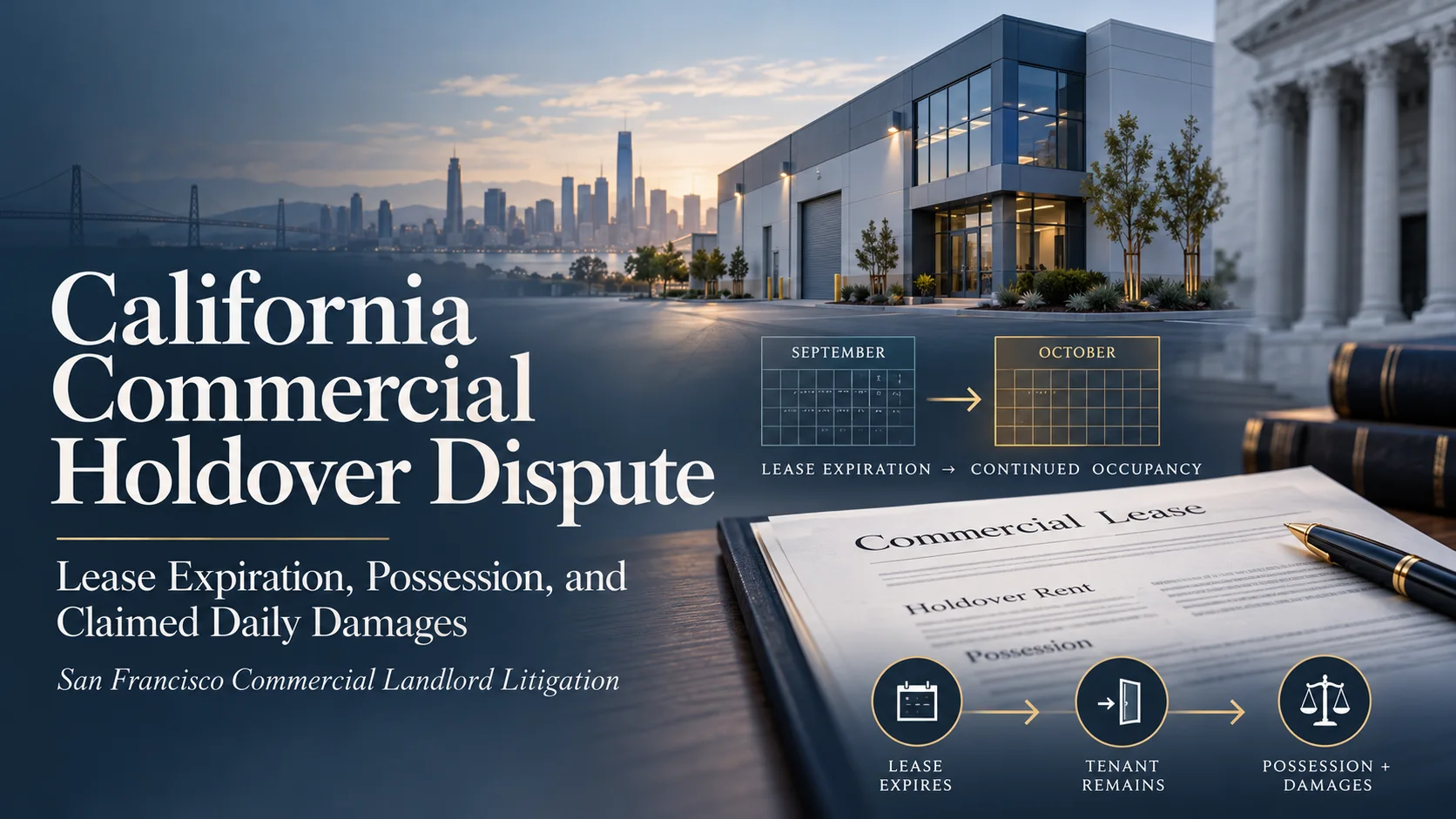
A San Francisco landlord alleges an AI startup held over after its lease expired and seeks possession plus more than $13,000 a day. The claims are unadjudicated.
A San Francisco commercial landlord is seeking possession of an industrial property and more than $13,000 per day in alleged holdover damages from artificial-intelligence startup Physical Intelligence.
The dispute illustrates an important issue under California law: what happens when a commercial tenant remains in possession after its lease expires?
The Dispute
On October 2, 2026, 2000 Folsom Partners, LLC filed a commercial unlawful-detainer action against Physical Intelligence (PI), Inc. concerning property at 2000 Folsom Street in San Francisco.
According to The San Francisco Standard's October 6 report, which describes lease documents attached to the complaint, Physical Intelligence initially leased approximately 29,000 square feet for $60,000 per month. A subsequent amendment reportedly expanded its occupancy, increased rent to $160,000 per month through September, and eliminated an earlier month-to-month option.
The landlord alleges that Physical Intelligence remained after the amended lease expired in September. It seeks possession and more than $13,000 per day in holdover damages.
These are the landlord's allegations and demands—not findings of liability or an award of damages.
The dispute has drawn additional attention because the landlord says a new tenant wants to move into the approximately 98,000-square-foot property, and the Standard reported, citing sources, that the incoming tenant is Anthropic. The terms of any such lease have not been publicly confirmed. (Source: Commercial Unlawful-Detainer Filing, October 2, 2026.)
What Happens When a Commercial Lease Expires?
Under California Code of Civil Procedure section 1161(1), a tenant who remains in possession after the expiration of a tenancy without the landlord's permission may be subject to an unlawful-detainer action, provided the statutory requirements are satisfied. (Cal. Code Civ. Proc., § 1161(1).)
Expiration-based unlawful detainer differs from an eviction based on nonpayment of rent, which is discussed in our article on what California landlords can do when a tenant stops paying rent. The applicable notice requirements and defenses depend on the tenancy and circumstances.
Does Accepting Rent Create a New Tenancy?
Potentially. California Civil Code section 1945 establishes a rebuttable presumption of renewal when a tenant remains after expiration and the landlord accepts rent. Where rent is payable monthly, the presumed renewal cannot exceed one month. (Cal. Civ. Code, § 1945.)
However, the lease's terms and the parties' conduct remain important. Accepting payment does not invariably establish a renewed tenancy under every circumstance.
Can a Landlord Recover $13,000 Per Day?
Not automatically. Commercial leases may provide for increased holdover rent, liquidated damages, or other remedies when a tenant fails to surrender possession.
Under California Civil Code section 1671(b), a qualifying contractual liquidated-damages provision is generally enforceable unless the party challenging it establishes that it was unreasonable under the circumstances existing when the contract was made, subject to applicable statutory exceptions. (Cal. Civ. Code, § 1671(b).)
However, increased holdover rent, liquidated damages, and other claimed losses can involve different legal analyses. Whether the amount sought in this dispute is recoverable cannot be determined without examining the operative lease, its amendments, the legal basis for the demand, and the relevant evidence.
Key Takeaway for California Landlords and Businesses
Commercial lease expiration can have financial consequences beyond unpaid rent. Landlords and tenants should carefully review expiration dates, renewal provisions, holdover clauses, rent acceptance, and surrender obligations before a lease ends.
The Physical Intelligence dispute underscores the importance of clearly documenting those rights and obligations—but the available reporting does not establish the ultimate outcome of the litigation.
Mahrouyan Law, P.C. represents California landlords and businesses in commercial lease disputes, unlawful-detainer proceedings, and related civil litigation, including landlord representation and unlawful detainer and small business and commercial litigation. The firm does not represent any party discussed in this article.
Sources & Authorities
- Court filing index — 2000 Folsom Partners, LLC v. Physical Intelligence (PI), Inc. (S.F. Super. Ct., filed Oct. 2, 2026) (Trellis)
- The San Francisco Standard (Oct. 6, 2026)
- San Francisco Chronicle — reporting on Anthropic's contemplated lease
- Cal. Code Civ. Proc. § 1161
- Cal. Civ. Code § 1945
- Cal. Civ. Code § 1671
Mahrouyan Law handles these matters directly. Read more about how the firm approaches landlord representation & unlawful detainer in California, or discuss your own situation with the firm.
Facing a Commercial Lease Dispute?
Contact Mahrouyan Law, P.C. to discuss your legal options.

Omeed Mahrouyan is the founder of Mahrouyan Law, P.C., a California firm handling business and commercial litigation, property and cargo damage claims, personal injury, landlord representation, startup transactions, and practical intellectual property matters. Clients work directly with him on strategy, drafting, and case decisions.
More about Omeed Mahrouyan →