
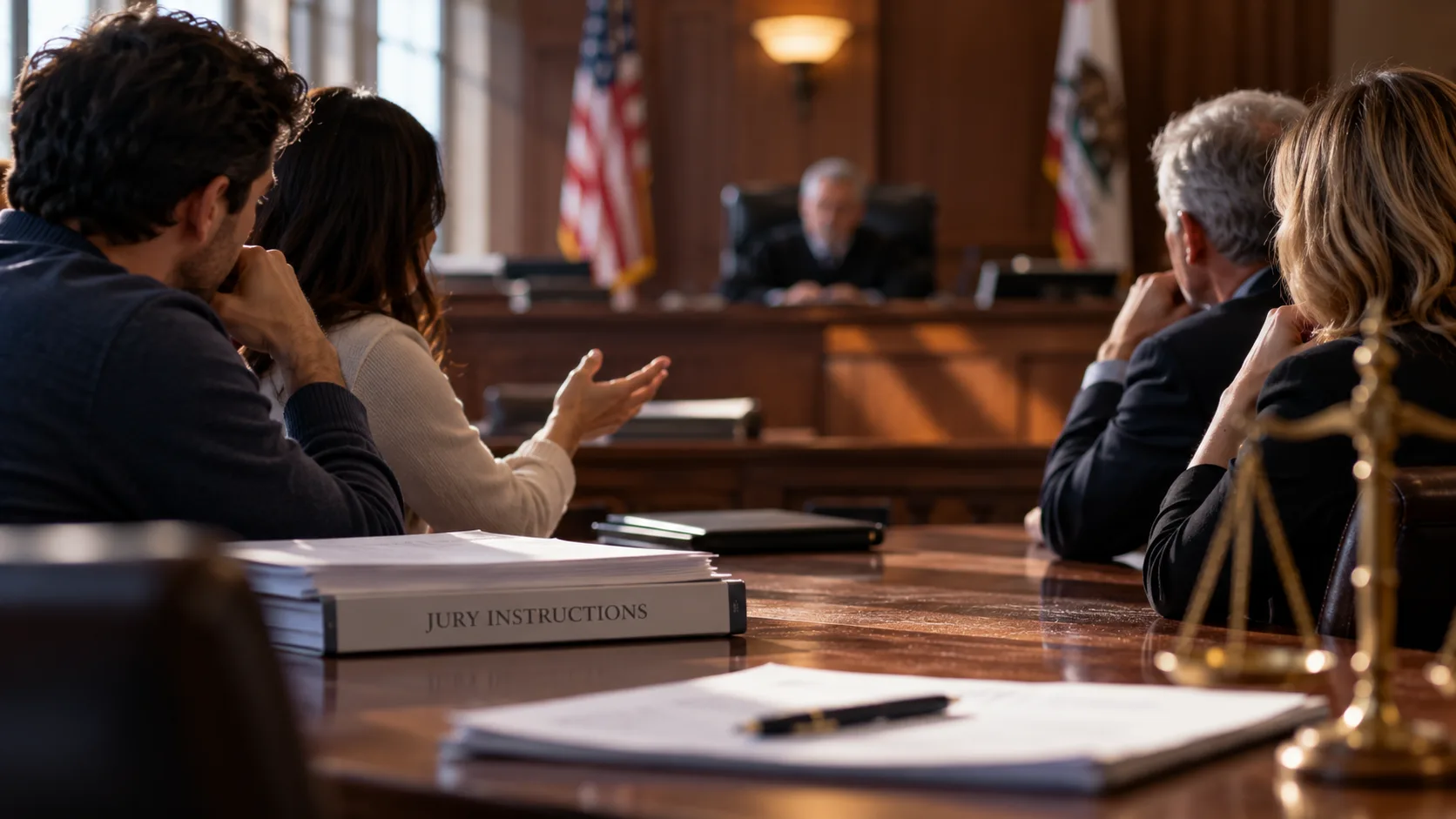
The Fifth District affirmed a new-trial order after jurors discussed the defendant's finances, insurance, and other matters outside the evidence.
Can a personal-injury verdict be set aside because jurors considered whether the defendant could afford to pay?
In Martinez v. Contreras, the California Court of Appeal affirmed an order granting a new trial after jurors discussed the defendant's financial circumstances, insurance, and other considerations unrelated to the evidence. The Fifth District's opinion was filed October 5, 2026, and certified for publication October 9, 2026.
The decision illustrates an important principle: compensatory damages must be determined from the evidence and applicable law, not speculation about a party's ability to pay.
What Happened in Martinez v. Contreras?
Aleshia Martinez sued Antonio Contreras following a March 2021 motor-vehicle collision in Fresno County. According to the appellate opinion, Contreras stipulated to negligence, and the trial court directed a verdict on causation. The remaining trial concerned damages.
On October 31, 2024, the jury awarded Martinez $55,000, consisting of:
- $20,000 in past economic damages;
- $20,000 in past noneconomic damages;
- $15,000 in future noneconomic damages; and
- no future economic damages.
Martinez moved for a new trial, asserting jury misconduct, inadequate damages, and insufficient evidence. In May 2025, the trial court granted the motion solely on the ground of jury misconduct. Contreras appealed, and the Court of Appeal affirmed the new-trial order. (Martinez v. Contreras (Oct. 5, 2026, F090026), certified for publication Oct. 9, 2026.)
What Did the Jurors Discuss?
The new-trial motion included declarations from two jurors describing statements made during deliberations. According to those declarations, jurors discussed:
- Contreras's financial circumstances and whether he could afford a substantial judgment;
- why Martinez had sued Contreras rather than an insurance company;
- comparisons between Martinez's injuries and compensation received by injured military service members; and
- sympathy for Contreras.
The trial court found that these improper considerations were discussed extensively while the jury was determining damages.
The opinion also addressed a discussion about whether the verdict would have differed against a large corporation. The appellate court did not rely on that comparison as misconduct. It explained that jurors may appropriately check their own reasoning for improper influences and excluded that discussion from its misconduct analysis.
Why Were the Discussions Improper?
California juries must decide cases according to admitted evidence and the court's instructions. Three instructions were particularly relevant. Under CACI No. 105, the jurors had been instructed not to consider whether the parties had insurance. Under CACI No. 117, they had been instructed not to consider the parties' wealth or poverty. CACI No. 5000 directs jurors to base their factual determinations on evidence admitted at trial and not to let sympathy, bias, or prejudice influence their decisions.
The trial court concluded, and the appellate court upheld its finding, that the jurors' extensive discussion of Contreras's finances, insurance, outside comparisons, and sympathy violated those instructions.
These principles concerned the compensatory-damages issues presented in this case. Different considerations may apply to punitive damages or to insurance evidence admitted for a legally permissible purpose.
Can Juror Declarations Be Used to Challenge a Verdict?
Yes, but California imposes important limits. Evidence Code section 1150 permits consideration of certain objectively ascertainable statements, conduct, or events occurring during deliberations. It generally prohibits evidence offered to show a juror's subjective mental processes or how particular statements influenced an individual juror's decision.
The distinction matters. A juror's testimony that an improper subject was openly discussed may be admissible. A juror's private thoughts about why they voted a particular way generally are not.
In Martinez, the appellate court distinguished admissible accounts of improper discussions from statements concerning individual jurors' private reasoning, and concluded that the admissible evidence supported the trial court's finding of misconduct.
Why Did the Court Uphold a New Trial?
Code of Civil Procedure section 657 authorizes a new trial on specified grounds, including jury misconduct. The court examines whether the offered evidence is admissible, whether misconduct occurred, and whether it was prejudicial. Established jury misconduct gives rise to a rebuttable presumption of prejudice.
The appellate court concluded that Contreras had not overcome that presumption. It also noted that the appellate record omitted substantial portions of the trial evidence, including a complete reporter's transcript, which limited Contreras's ability to show that the misconduct was harmless. The court therefore found no abuse of discretion in granting a new trial.
The appellate court did not determine that $55,000 was an inadequate award. It affirmed the new-trial order based on jury misconduct, not an independent reassessment of Martinez's injuries.
What Does This Mean for California Personal-Injury Cases?
First, compensatory damages must be assessed according to the evidence and governing law, rather than assumptions about who can afford to pay. For how damages are evaluated from the evidence, see How Much Is My Personal Injury Case Worth in California?
Second, improper deliberations can support a new-trial motion when admissible evidence establishes misconduct and the resulting presumption of prejudice is not rebutted. Not every passing comment will require a new trial.
Third, an unfavorable verdict does not itself establish misconduct. A party challenging a verdict must identify a legally recognized basis for relief.
Martinez does not establish what compensation the plaintiff should ultimately receive, and the ruling does not guarantee a larger award in later proceedings.
The Bottom Line
The Fifth District upheld a new trial because jurors considered the defendant's financial circumstances, insurance, and other matters outside the evidence when determining damages. A verdict must reflect the evidence and law, not assumptions about a party's finances or sympathy for either side.
Mahrouyan Law, P.C. represents individuals in selected California personal-injury claims and civil disputes. The firm is not involved in Martinez v. Contreras.
Frequently Asked Questions
Can a California personal-injury verdict be overturned because of jury misconduct?
Yes. Code of Civil Procedure section 657 allows a new trial for qualifying jury misconduct. The moving party must establish misconduct through admissible evidence, and the court must assess prejudice.
Can jurors consider whether a defendant has insurance?
Jurors generally must follow the court's instructions concerning insurance. In Martinez, the jurors were instructed not to consider insurance when determining the verdict. Insurance evidence may be admissible for certain other purposes under different circumstances.
Can jurors consider whether a defendant is wealthy or poor?
Not when determining ordinary compensatory damages. Different rules may apply to punitive damages, where financial condition can be relevant.
Can jurors testify about what happened during deliberations?
In limited circumstances. Evidence Code section 1150 permits evidence of certain objectively ascertainable statements or conduct but generally excludes evidence concerning jurors' subjective mental processes.
Did Martinez receive a larger damages award?
The appellate court did not award additional damages. It affirmed an order granting a new trial. The eventual damages outcome was not determined by the appellate opinion.
Sources & Authorities
- Martinez v. Contreras (Oct. 5, 2026, F090026), Cal. Ct. App., Fifth Dist.; certified for publication Oct. 9, 2026
- Cal. Code Civ. Proc. § 657 — new trial
- Cal. Evid. Code § 1150 — evidence concerning jury deliberations
- CACI No. 105 — Insurance
- CACI No. 117 — Wealth of Parties
- CACI No. 5000 — Duties of the Judge and Jury
- Judicial Council of California Civil Jury Instructions (official resource)
Mahrouyan Law handles these matters directly. Read more about how the firm approaches personal injury in California, or discuss your own situation with the firm.
Questions About a California Injury Claim?
Contact Mahrouyan Law, P.C. to discuss the circumstances and available options.

Omeed Mahrouyan is the founder of Mahrouyan Law, P.C., a California firm handling business and commercial litigation, property and cargo damage claims, personal injury, landlord representation, startup transactions, and practical intellectual property matters. Clients work directly with him on strategy, drafting, and case decisions.
More about Omeed Mahrouyan →