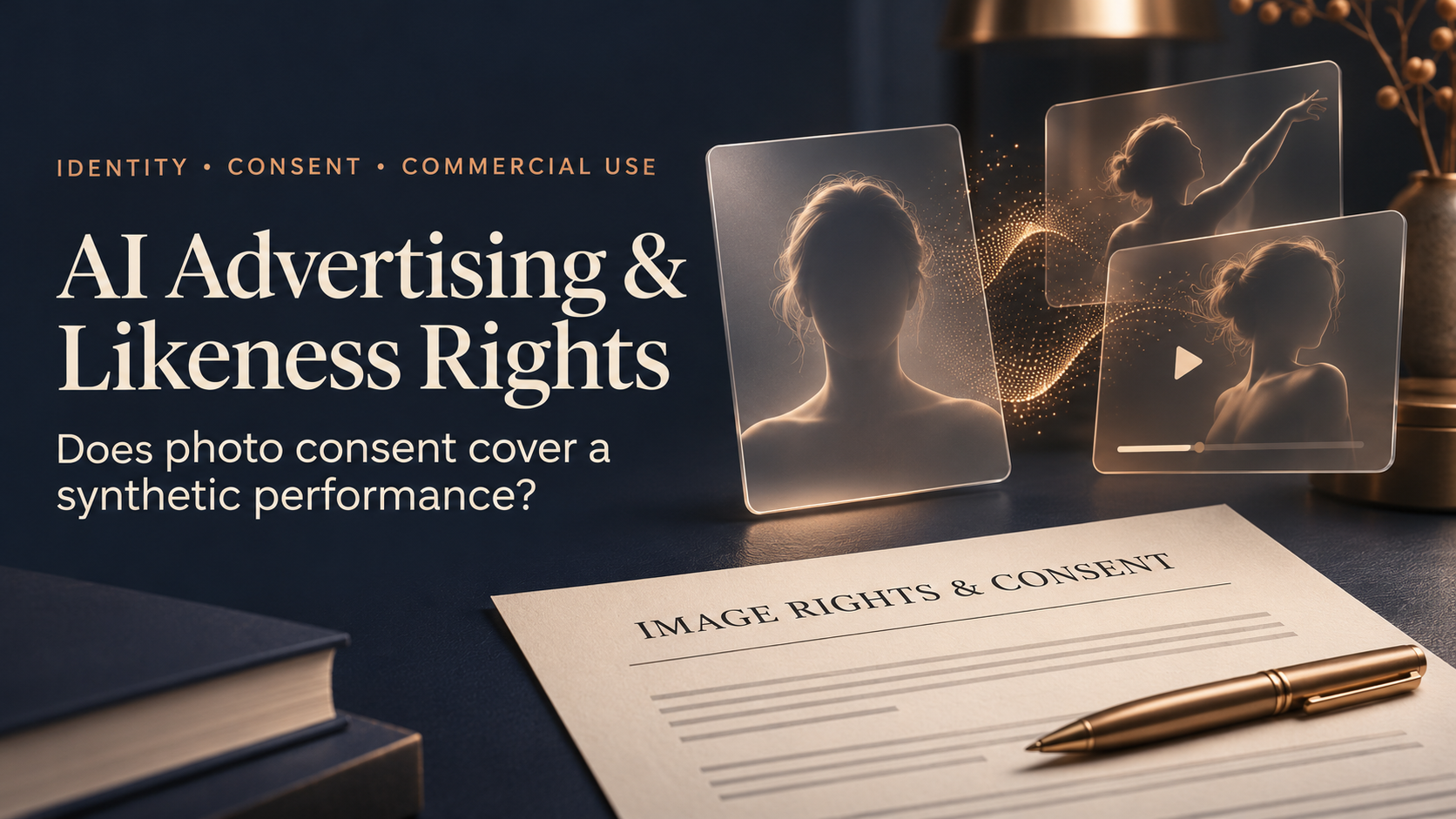
A Los Angeles lawsuit raises questions about AI-generated ads, model consent, publicity rights, and the marketing assets businesses acquire.
A photograph can be stored, copied, or even licensed without answering whether the depicted person agreed to a particular advertising use. A new synthetic image or simulated performance raises additional questions about what was authorized, by whom, and for what purpose.
A recently filed Los Angeles lawsuit illustrates those questions. It is a complaint, not a ruling establishing new law, and its allegations have not been adjudicated.
What the Complaint Alleges
Stanfield v. Cooper Street, LLC, No. 2:26-cv-13465, was filed November 18, 2026, in the Central District of California. According to the complaint, Jeffrey S. Stanfield participated in a January 2021 Santa Monica modeling session, received clothing and photographs, signed no model release, and made no oral agreement granting usage rights. He alleges that photographs from that session were later used in AI-generated advertisements and a simulated video performance created after the business’s January 2025 acquisition. 1 2
His claims include false endorsement, statutory and common-law publicity rights, false light, and unfair competition. These are allegations—not findings or admissions established by a court. In particular, his allegation that no release existed is not a judicial determination that no consent existed. 1
The accessible docket material confirms the filing and administrative entries through November 19; subsequent developments could not be confirmed. 2
Consent and Publicity Rights
California Civil Code § 3344 addresses specified knowing commercial uses of a person’s name, voice, signature, photograph, or likeness without prior consent, subject to its requirements and exceptions. In an advertising dispute, the analysis may include whether the use falls within the statute, whether consent existed, and what that consent covered. The statute does not make every depiction actionable or universally require a signed written release. 3 4
Participation in a photo shoot may be relevant evidence, but it is not a complete answer. A broad release may present different questions from a narrow one, and the surrounding facts and contract language matter. It would be equally categorical to claim that every AI edit requires a new release or that an existing release necessarily authorizes a synthetic performance.
Copyright and Likeness Rights Are Different
Possessing a photograph, owning or licensing its copyright, and having permission to exploit the depicted person’s identity are separate questions. A photography license does not necessarily supply every identity-related permission, and a model’s consent does not necessarily supply copyright permission.
Neither party’s copyright ownership nor the photographer’s authority to grant every necessary right should be presumed. This is a rights-clearance issue, not a copyright ruling in this case; the complaint does not assert copyright infringement. 1
False Endorsement Is a Separate Inquiry
Federal law addresses, among other things, actionable confusion about affiliation, connection, association, sponsorship, or approval. Under 15 U.S.C. § 1125(a)(1)(A), the question here would include whether an advertisement misleadingly suggests that the person approved or participated in the promotion. 5
Unauthorized likeness use alone does not automatically establish every element of false endorsement. The complaint’s allegations do not establish that the challenged advertisements meet that standard.
Buying a brand does not answer every question about its advertising rights
An acquisition review should treat historical marketing materials as a rights inventory, not simply a folder of reusable files. Practical considerations include:
- Photography licenses and model releases.
- Permitted media, purposes, duration, and alterations.
- Assignment and transfer provisions.
- Any language addressing synthetic images, digital replicas, or simulated performances.
- Acquisition representations, warranties, and indemnities.
These considerations do not mean every acquisition requires new consent. The purchaser does not automatically inherit—or avoid—all potential liabilities. The original permissions, assignment language, transaction documents, and later use require review. Mahrouyan Law’s Startup & Business Transactions practice addresses contractual and acquisition-related business questions.
Establish the Rights Before Repurposing
Before turning historical marketing photographs into AI-generated advertisements, a business should establish what rights it actually holds. Review the original agreements, their scope, the chain of rights, and any later acquisition documents rather than assuming possession equals permission. Mahrouyan Law’s Trademarks & Practical Intellectual Property Counsel practice addresses practical advertising-rights and licensing questions.
Sources
- 1.
- 2.
- 3.
- 4.
- 5.
Discuss Advertising and Licensing Rights
If your business has questions about advertising permissions, licensing agreements, or acquisition-related rights, contact Mahrouyan Law to discuss your circumstances and whether the firm can assist.

Omeed Mahrouyan is the founder of Mahrouyan Law, P.C., a California firm handling business and commercial litigation, property and cargo damage claims, personal injury, landlord representation, startup transactions, and practical intellectual property matters. Clients work directly with him on strategy, drafting, and case decisions.
More about Omeed Mahrouyan →