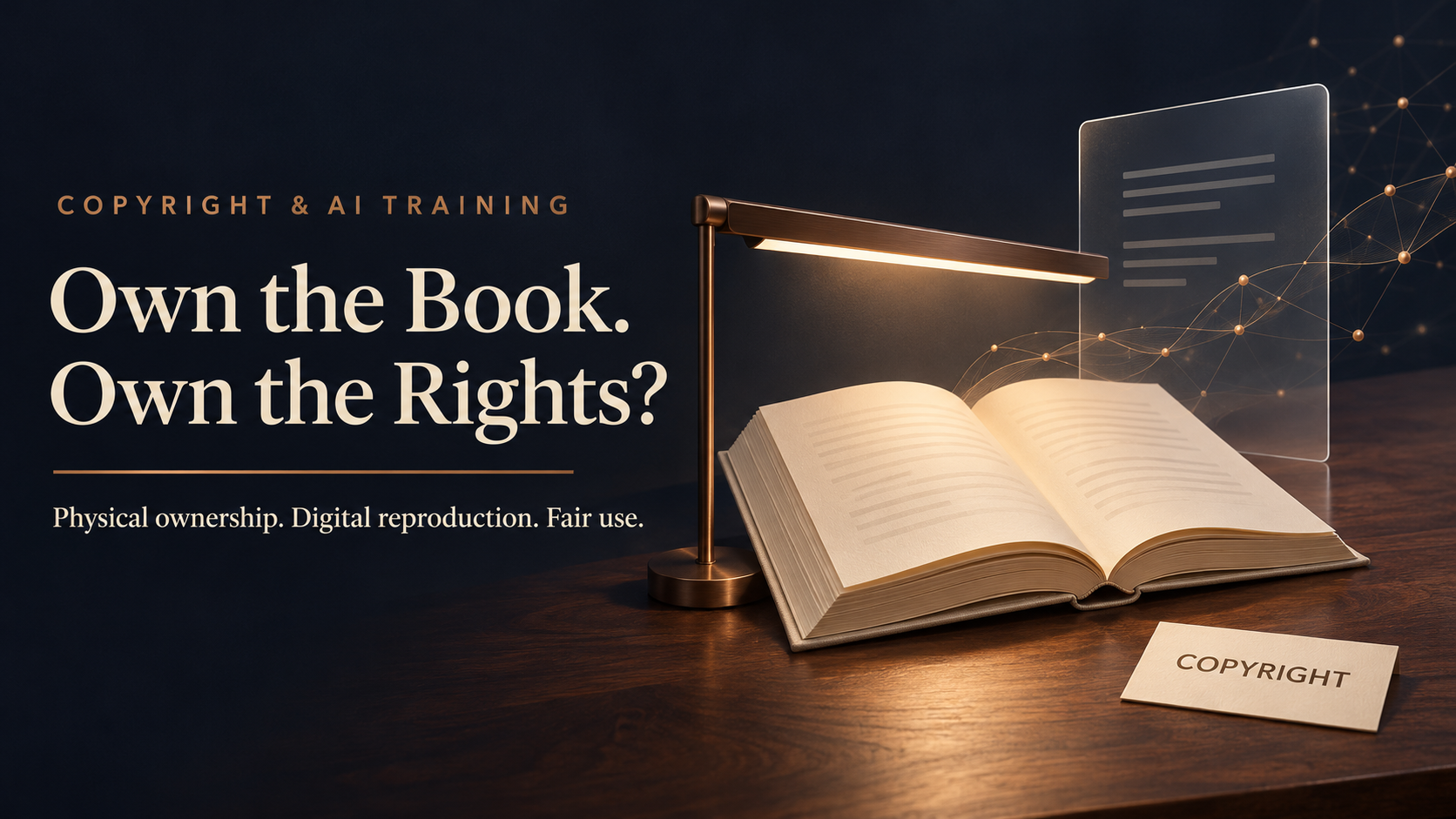
Purchasing a physical book does not transfer its copyright. But that distinction alone does not resolve whether a particular reproduction qualifies as fair use.
What Are the New Lawsuits About?
On November 4, 2026, three separate copyright lawsuits were filed in the U.S. District Court for the Northern District of California: one by academic publisher Cognella, Inc.; one by Cambronne, Inc. and four individual authors; and one by Chicken Soup for the Soul, LLC. The defendants are three related SpaceX Super Intelligence entities, formerly named X.AI, that the complaints describe as developing Grok. 4 5 6 7
According to the complaints, the defendants obtained books from unauthorized online “shadow libraries,” bought print books and scanned them for training, uploaded portions of works to others while downloading through BitTorrent, and removed copyright-management information. These are allegations. They are not findings, and the plaintiffs elected to sue individually rather than as a class. 4 5 6 7
Owning the Copy Is Different From Owning the Copyright
Federal law separates the physical object from the copyright in the work it contains. Transferring a book does not, by itself, convey any rights in the copyrighted work. 1
The copyright owner generally holds the exclusive right to reproduce the work, subject to statutory limitations and exceptions. 2
Consider a simple example. A company buys a hardcover. It owns that copy and may generally keep it, read it, or resell it. The purchase does not itself transfer the author’s reproduction rights. That explains the ownership distinction—not whether every scan or training use is ultimately lawful.
Fair Use Is a Separate Inquiry
Fair use is a limitation on the copyright owner’s exclusive rights. Courts consider four statutory factors, among other relevant circumstances: 3
- The purpose and character of the use, including whether it is commercial.
- The nature of the copyrighted work.
- The amount and substantiality of the portion used in relation to the copyrighted work as a whole.
- The effect of the use on the potential market for or value of the work.
The analysis is fact-specific. A commercial purpose does not automatically defeat fair use, and a claimed technological benefit does not automatically establish it. Not every AI training use is categorically lawful or unlawful, and the absence of a license does not, standing alone, resolve the question.
Why the Source and Handling of the Books Matter
The complaints plead separate theories for different alleged acts: training on copies from unauthorized sources, scanning purchased print books, and distributing works through file sharing. Each may require separate analysis: 4 5
- How digital copies were obtained.
- Whether, and how, physical copies were scanned.
- How copies were stored and used for training.
- Whether copies were distributed to others.
A conclusion about training does not automatically resolve every acquisition, storage, or distribution issue. Allegedly unauthorized downloads and purchased print copies also present different facts, and the plaintiffs’ descriptions of the source material have not been proven.
Copyright-Management Information Is Another Issue
Copyright-management information can include a work’s title, author information, and copyright notice when conveyed in connection with copies, performances, or displays of the work. Section 1202(b)(1) addresses intentionally removing or altering that information without authority. Intentional removal is not the whole inquiry: civil liability also requires knowledge, or reasonable grounds to know, that the act will induce, enable, facilitate, or conceal infringement. 8
The provision is therefore narrower than a rule that missing attribution is illegal. Removal, distributing works knowing information was removed, and newly generated output can present different questions.
Practical Steps for Businesses Using Content for AI
Businesses acquiring or using content for AI development may consider documenting:
- Where training material came from.
- What permissions or licenses were obtained, and their scope.
- What copying and distribution actually occur.
- How copyright-management information is handled.
These are practical review steps, not a guarantee against liability. Authors and publishers may find the same questions useful in evaluating how their works are used. Mahrouyan Law’s Intellectual Property practice and Startups & Transactions practice address related licensing and ownership questions.
Sources
- 1.
- 2.
- 3.
- 4.
- 5.
- 6.
- 7.
- 8.
Discuss Your Matter
For a copyright, licensing, or startup intellectual-property question, contact Mahrouyan Law to discuss your circumstances and whether the matter fits the firm’s practice.

Omeed Mahrouyan is the founder of Mahrouyan Law, P.C., a California firm handling business and commercial litigation, property and cargo damage claims, personal injury, landlord representation, startup transactions, and practical intellectual property matters. Clients work directly with him on strategy, drafting, and case decisions.
More about Omeed Mahrouyan →